Beating AI Using Public Domain Photos
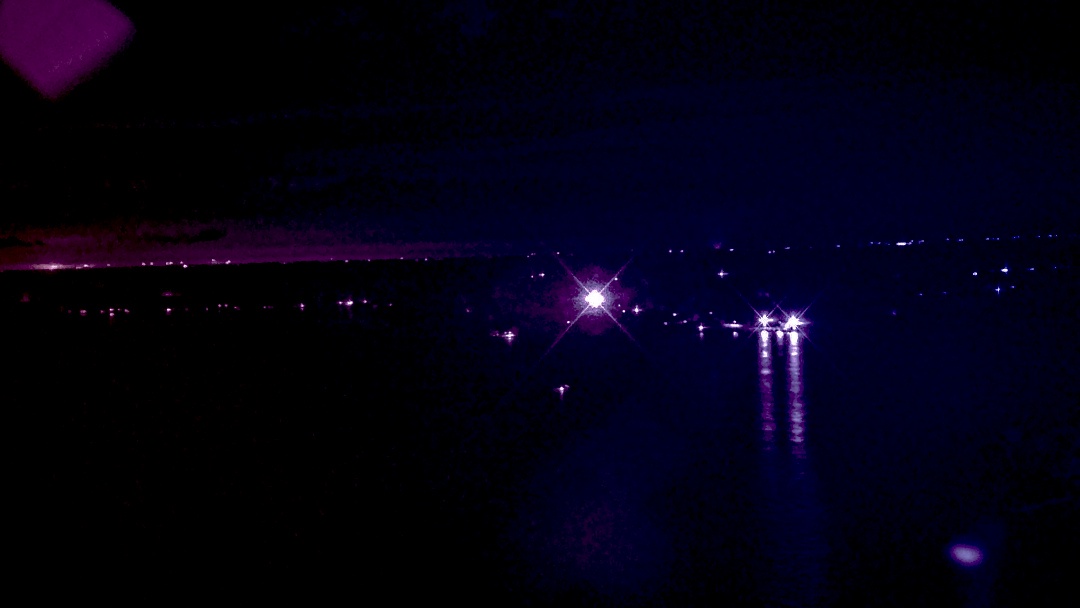
I've recently rediscovered something I had done a long time ago: modifying pictures from weather and traffic cameras.
Note: I am cautious about the cameras that I choose to use. They have to be cameras that are putting their photographs online, and specifically be in the public domain. Obviously, not all weather camera images are in the public domain. Privately owned cameras, especially the ones use for television broadcasts, are like nonpublic-domain. (Although, I have a doubt that any of them would really care about this as to them these photographs are ephemera with a rather limited usage.)
I go for the ones that I know are from government agencies, especially those owned by NOAA, precisely because the government does not own these images. They are, by definition in the public domain.
One of the easiest things to do with these photos is to use a gradient mask over them to come up with different effects. For example, here's an alternative version of the above photo:
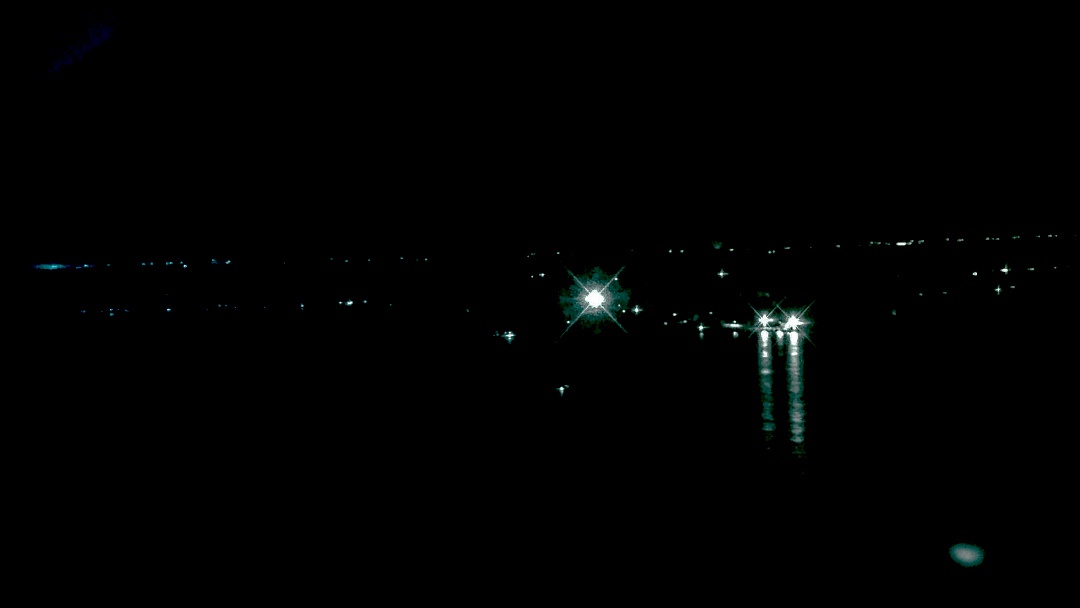
It's obvious that these are the same photo, and yet the effect is quite different because of the details in the two them. The first one clearly shows some clouds along the horizon, and definite blooming coming from the lights. While this second photo makes everything look more isolated. None of the effects from the light bloom, you can't see the clouds along the horizon, and for that matter it's not even all that clear that the horizon is where the lights at the back are.
There's a ton of other things that can be done with these photographs that don't involve using gradients. Take this photo I used in a blog post the other day:
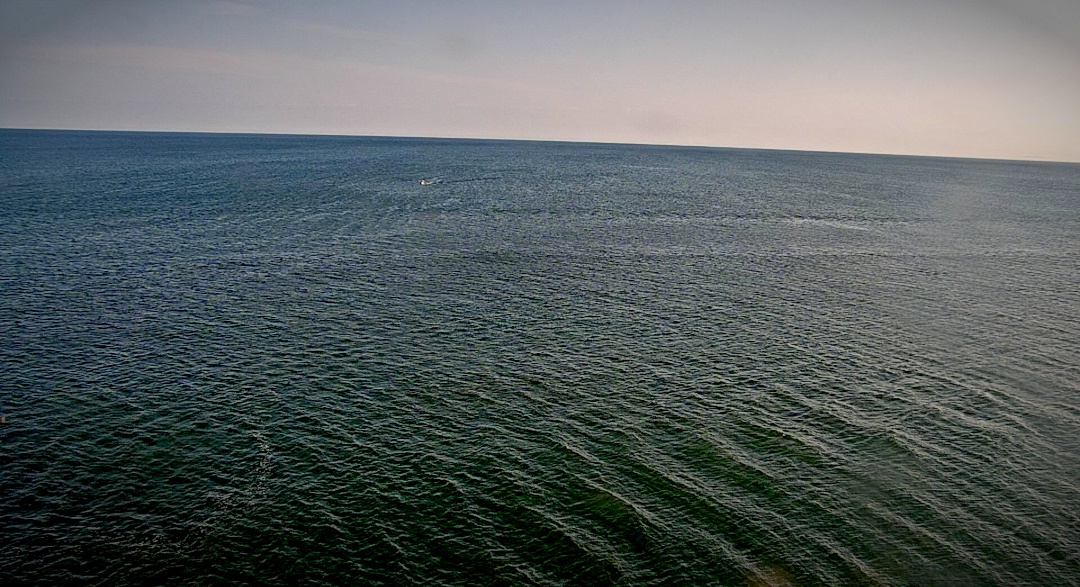
What I did here was to crop the portion I wanted out of a larger photo, rebalanced the colors, adjusted the color temperature, adjust the contrast and brightness, and then added a vignette. None of the changes were too drastic on this photo. My objective was to highlight the ripples in the water (which was appropriate to a portion of the article that had a surfer analogy in it).
These are only a few simple examples of the kinds of things that can be done with public domain photos like these. I've done stuff where I've taken two photos from one camera from different times / conditions, adjusted them a bit, then overlaid them like a double exposure. It can look really cool.
I've also done things where I've hand created multiple masks to go over a photograph, using different colors and different brush textures to make the photograph have an almost alien look to it. And in still other cases, I've made collages from a set of photographs that I hand modified. This allows you to compose something that is new and fits a vision that you have.
So, what's the point to this?
I see a lot of people go to sites like Unsplash, Pexels, Pixabay, etc. to find images that they can use for various purposes. There is no problem with this, except that these places often intermingle nonpublic-domain photos in with the public domain photos in an attempt to sell them to you. And there is nothing wrong with that ether.
However, there are a few issues (and ones that I have run into before): some photographers will upload the same photograph to multiple sites, and in some cases the licenses may not be the same. And, in at least one case, I had an issue with a platform because I was using a very popular public domain photo. They had issues with it because it turned up in a reverse image search. (I still don't understand that one… It was clearly a public domain image, so they shouldn't have cared… But anyway…)
But, that experience did bring up another thought: don't you want to have something unique representing your work? Maybe you don't have the skill to create a work on your own, but I'm fairly certain you can learn how to do a bunch of image manipulation tricks in whatever software you choose to use. (I use The Gimp, which I know is not everyone's cup of tea, but I've been using it for years at this point.) Isn't a bit more satisfying to say that you did something for yourself? At least you can say it wasn't generated by AI.
In these times when the choices tend to be: public domain photos, stock photos, or AI generated images, I find this to be quite satisfying. The only thing better is if I can use photographs of my own in this process (which I've also done). Above all else, I can say: I did this myself — there was no AI involved. And that means a lot to me.
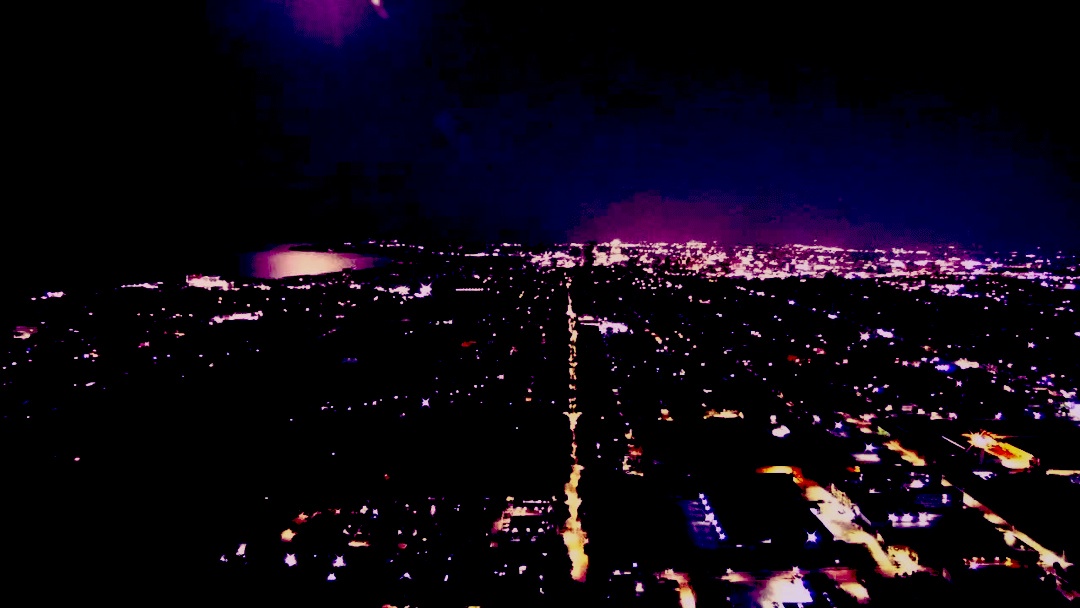
And here's a final image for good measure:
Categories: #Photography Tags: #publicdomain, #derrivative, #antiai, #trafficcams, #weathercams License: Copyright Unattributed. Licensed under Creative Commons BY-NC-SA 4.0.
| FediRing | ||
|---|---|---|
| ◀️ Prev | Home | Next ▶️ |