Rejecting the Luxury of Hobbies
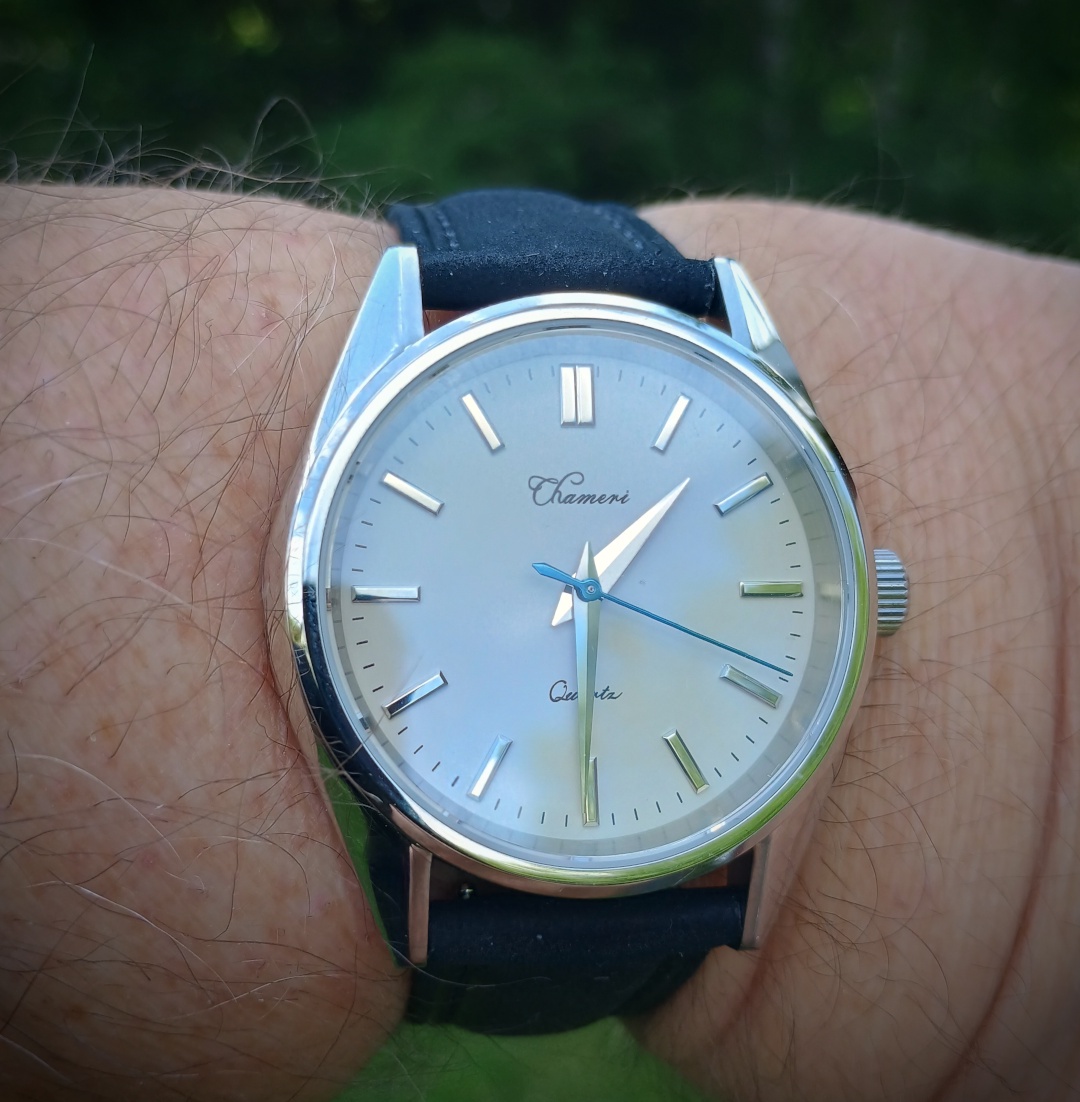 Chimeri standard dress watch (Photo by Unattributed, License CC BY-NC-SA)
“What are hobbies about?” is a question I started asking myself when I was watching YouTube videos about watches and fountain pens. The answer to that question showed that I have a fundamentally different view of hobbies than others. Worse, the things that I think of as hobbies aren't hobbies to a lot of people.
There are, at least three kinds of people that are interested in the areas that I consider to be hobbies. At least three kind of people that have a different type of interest than I have in the areas. I've been trying to come up with a way to define these people, and I think I have them down now.
Luxurians
The people I call “Luxurians” aren't interested in these hobbies because of genuine interest in the subject. They might learn about the subject, but that's a side effect of feeling that they need to feign interest to others.
Luxurians are the people that buy into these hobbies not from genuine interest. They buy into them because they have the money to blow. They are more interested in the brand, and the marketing over the quality of the product.
But, the top reason they buy into these hobbies is that they can spend a lot of money. The Luxurians are the “flexers” of the internet. They are buying symbols of their status, and couldn't really care about anything else.
The Investors
This is a peculiar breed of hobbyist, and they are infecting a lot of hobbies, from watches and fountain pens, to LEGO, Pokémon trading cards, and anything Disney.
The Investors are the people that study the resale markets. They are looking for something to “invest” in. Many times it doesn't matter what it is, they will chase the trends of whatever market is the “hottest”. They are collecting items they believe will appreciate in value, and thus bring them a payday when they sell the stuff they've horded.
The Chasers
This is an interesting intersection of the Luxurians and The Investors. They are the people that are just interested in whatever is the trendiest at the moment. If they can buy something that will appreciate in value that is the best for them.
Depending on the hobby this might be acquiring the latest and greatest item on the market, the item that the majority of people will not be able to get their hands on. Whether this is due to outrageously inflated prices, or because of genuine scarcity is inconsequential. However, as soon as the novelty of the item wears off, it will quickly be replaced with something else.
Why Do I Bring This Up?
There is, I feel, a massive level of distortion around hobbies in social media. That distortion comes from the types of people I listed above. There are a lot of them making content, and it's important to identify them in order to not kill your joy for your chosen hobbies.
Let me provide an example of how these types of people almost killed my joy for one of my hobbies: wristwatches.
Watching various “influencer” types, you encounter some extreme bias towards certain brands, like Rolex and Audemars Piguet, Tissot and several others. It was effective, I found myself wanting a Royal Oak, a PRX, and other high-end watches. (One I had my eyes on was over $100,000.)
And it was making me miserable. Then I realized some things about these “influencers”. They tended to have more involvement in the secondary market, and sometimes in the primary market for watches than they tended to disclose.
For example, one of them had an online shop for watches, and managed to turn that into their own boutique. Another one was a dealer who only presented watches he carried in his store. Several influencers started their own watch brands. And, even ones that didn't have a direct conflict would occasionally mention they had sold, or had listed watches for sale they had recently done videos on.
And there were two more things I noticed: (1) All of these types of people would dismiss the majority of watches that were quartz, solar, etc. (with the exception being Casio watches—but typically only specific models). (2) they had a focus on Swiss mechanical watches, and frequently dismissed watches from other regions.
Their reasoning? Well, they wanted to present watches that had “real” heritage. Watches that would mean “mean” something in the years to come. Yada-yada-yada.
In other words: they were full of Public Relations and Marketing terminology. That's when it clicked, I wasn't being informed by reputable and knowledgeable people. These were people that were using their knowledge to shape a narrative to promote a product, or influence a market.
So What Do You Do About It?
The answer to this comes in two fairly simple parts:
- Learn to identify people that have some type of self-interest in the hobby. Sometimes this is difficult, but sometimes they are transparent about it. Basically, be skeptical of anyone in a hobby until they prove themselves.
- Always remember the reasons you became interested in a hobby. Stick to your guns, and dismiss influencers that don't share your values or interests.
For example, I tend to stay away from most of the wristwatch “influencers” these days. There is one that I will still watch because his values are pretty transparent:
- He purchases most of the watches himself.
- He resells a lot of watches he reviews. (He's very up front about this.)
- When he receives units for review, he often doesn't just say they provided it, he frequently summarizes the communication he had with the company (a few times he's even shown the email exchanges he had with the company).
- He doesn't have a bias towards certain brands or regions. He's open to watches at all price brackets, and all regions.
- He doesn't have a bias towards specific movements.
- Expensive watches are frequently borrowed from a friend.
- He independently tests the claims of various companies. (He's acquired his own equipment and shows his tests.)
So, how does he make money doing this? He understands the game. He has multiple income sources: advertising, channel memberships, Patreon, and a community app that offers a subscription level, and occasional “sponsored” reviews (those are typically the watches sent to him for review, which he is allowed to resell).
And the big thing I've learned from him: don't always take his comments as gospel. In one case, he couldn't recommend a watch because it didn't sit well on his wrist, even after resizing the bracelet. But, here's the thing: his wrist is 2.5 inches smaller in diameter than mine. The same watch fits me well with some adjustment. His other issues were minor aesthetic things that he didn't like, I didn't have an issue with those points. So, a watch that he couldn't recommend is one of my most frequently worn watches, and it brings me joy to wear it. (And no, it's not the one in the photo, but I enjoy that one too.)
And that's the bottom line: learn and remember the things that you enjoy. Don't let influencers drive you away from your values. Don't let them steal your joy.
| FediRing | ||
|---|---|---|
| ◀️ Prev | Home | Next ▶️ |